
Identifying the priorities in the fight against major crime.
Serious and organised crime is an increasingly dynamic and complex phenomenon that requires robust, intelligence-led response by EU law enforcement.
While traditional crime areas such as international drug trafficking remain a principal cause of concern, the effects of globalisation in society and business have facilitated the emergence of significant new variations in criminal activity.
Criminal networks exploit legislative loopholes, the internet and conditions associated with the economic crisis to generate illicit profits at low risk, for example.
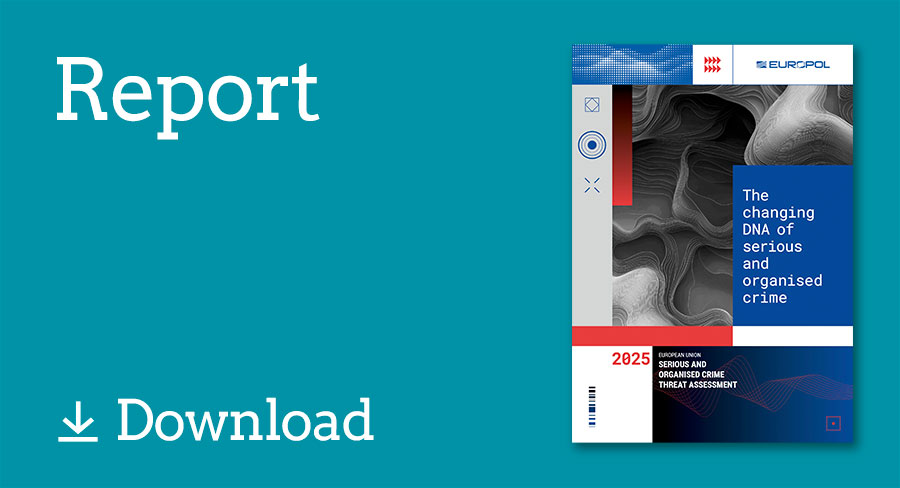
One of Europol’s flagship reports, the EU Serious and Organised Crime Threat Assessment (EU-SOCTA) updates Europe’s law enforcement community and decision-makers on such developments in serious and organised crime and the threats it poses to the EU.
Informed by its analysis of the prevailing threats, the EU-SOCTA identifies a number of high priority crime areas that the operational response in the EU should focus on.
Methodology
The EU-SOCTA methodology allows Europol to understand and assess serious and organised crime holistically. Europol uses a mixed method approach involving qualitative and quantitative analysis techniques and a set of clearly defined indicators to identify and specify the most threatening criminal phenomena in the EU.
The aim of the methodology is to to assess the key threats of serious and organised crime in the EU in a consistent way. The methodology is structured along the focus, the tools (indicators), the analysis and prioritisation, and the results.