
Phygital-OC Podcast Explores Europe’s Response to Transnational Organised Crime
Phygital-OC Podcast Explores Europe’s Response to Transnational Organised Crime
Brussels, 1 June 2026
Phygital-OC has released the second episode in its podcast series, bringing together experts from across Europe to explore how governments, law enforcement agencies and communities can respond more effectively to the growing threat posed by transnational organised crime.
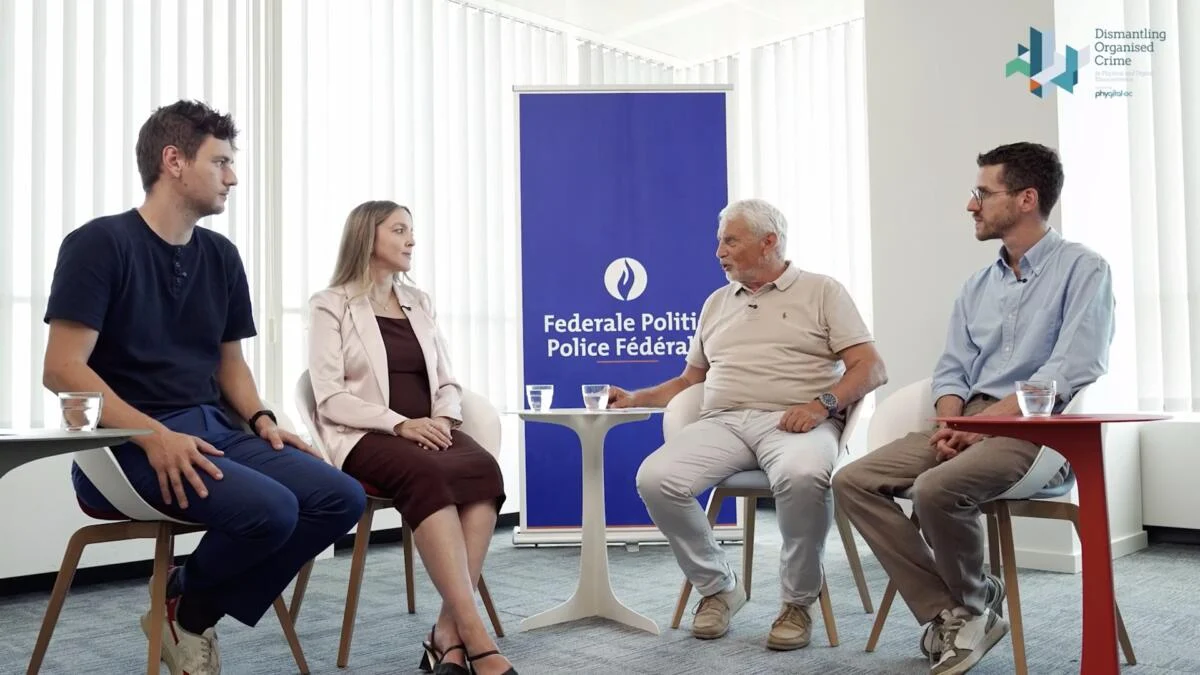
Recorded at the headquarters of the Belgian Federal Police in Brussels during EU Crime Fighting Week 2026, the episode brings together contributors from a number of EU-funded projects committed to dismantling organised crime, including Phygital-OC, Breaking the Broker and EUCPN, to discuss the practical solutions, innovations and approaches needed to tackle organised crime in an increasingly interconnected and digitally-enabled world.
Building on the first podcast, which examined the nature and scale of the problem posed by organised crime across Europe, this latest episode focuses on the response. Contributors discuss how organised crime groups are operating across borders, exploiting new technologies and adapting rapidly to changing environments, and what authorities therefore must do to keep pace.
The discussion highlights three priorities for Europe. The first is accelerating the adoption of technology, including artificial intelligence (AI), advanced analytics and open-source intelligence (OSINT), to better understand criminal networks, improve intelligence and strengthen investigations. The second is preventing criminal exploitation before it occurs, including efforts to reduce the recruitment of young people into organised crime and build greater resilience within communities. The third is strengthening cooperation between law enforcement agencies, civil society and private-sector partners to create a more coordinated response.
The episode also showcases how EU-funded projects are already developing practical solutions, from new approaches to intelligence-sharing and cross-border investigations to prevention initiatives and stronger public-private cooperation. Together, the contributors explore how innovation, collaboration and knowledge-sharing can help create a safer and more resilient Europe.
“Organised crime continues to evolve, and our response must evolve with it,” said Sergio Bianchi, International Research Director at Agenfor International and a member of the Phygital-OC project. “This podcast brings together different perspectives and experiences, but the message is clear: tackling organised crime requires innovation, cooperation and a shared commitment to working together across borders and sectors.”
The podcast is now available on the Phygital-OC website and forms part of a wider series exploring the challenges and solutions associated with dismantling organised crime across Europe. Through these conversations, Phygital-OC aims to raise awareness, promote collaboration and support collective action to prevent, detect and dismantle organised crime.