
Phygital-OC Delivers Advanced Training to Strengthen Libya’s Response to Organised Crime
Phygital-OC Delivers Advanced Training to Strengthen Libya’s Response to Organised Crime
TrTripoli, 25 June 2026
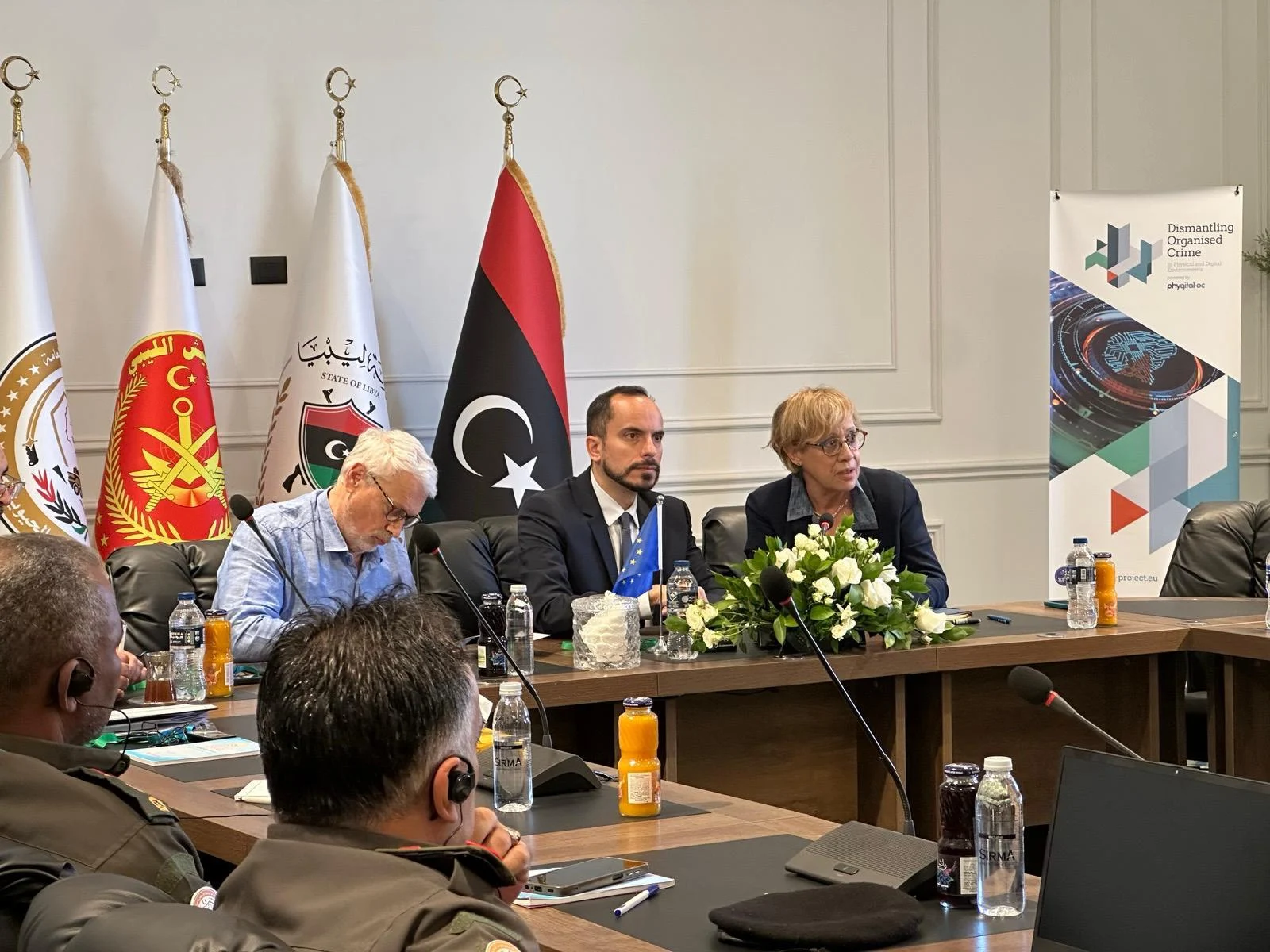
The Phygital-OC project has delivered a second advanced training programme in Tripoli, continuing its work to strengthen the capabilities of Libyan law enforcement agencies (LEAs) to investigate and dismantle transnational organised crime groups and networks.
Held from 23–25 June, the three-day course built on the project’s first training delivered in April, and forms part of an ongoing programme of capacity building with Libyan authorities designed to strengthen operational cooperation and investigative capability. It provided participants with more advanced practical skills and introducing new investigative techniques requested by Libyan authorities.
The training brought together representatives from the Libyan Ministry of Interior, Ministry of Defence, Border Guard Agency, Libyan National Center for Counterterrorism, General Attorney’s Office and the Central Bank of Libya.
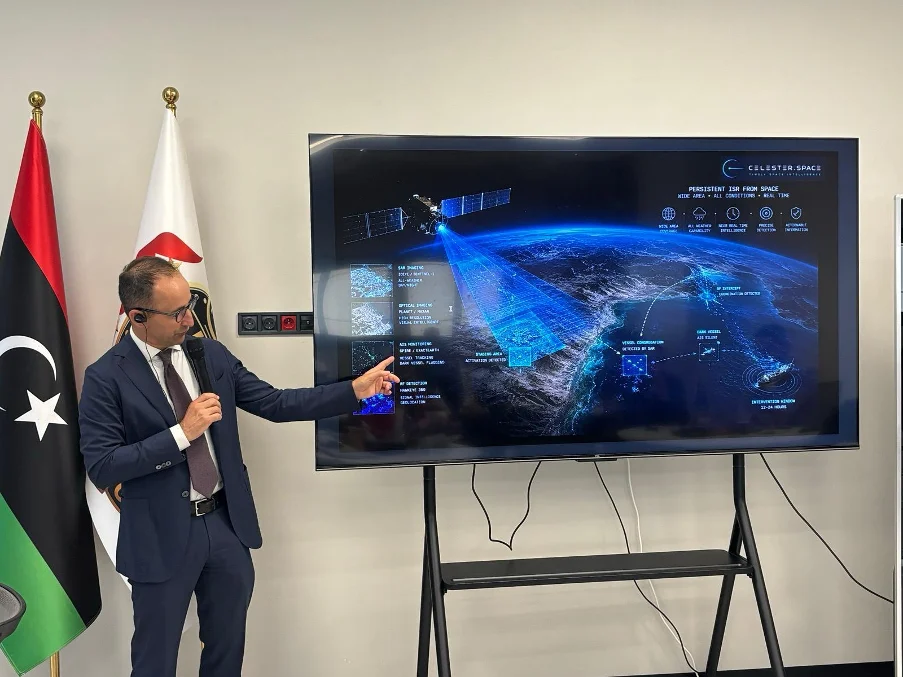
Delivered as part of Phygital-OC’s wider international training programme, the course focused on helping investigators address the growing digital dimension of organised crime. The training covered topics including the use open-source intelligence (OSINT), digital forensics, drone technologies and satellite-based surveillance. Practical exercises enabled participants to apply these techniques to realistic investigative scenarios.
Participants will also continue their learning through the project’s online Phygital-OC Training Platform, providing access to digital tools and Arabic-language training materials to support ongoing professional development.
“Organised crime is becoming increasingly technology-enabled, meaning investigators need the skills and tools to operate confidently across both the physical and digital environment,” said Simone Bonifazi, OSINT analyst and consultant for Agenfor International, a project partner and coordinator of Phygital-OC. “This second training marks another important step in strengthening our partnership with Libya and helping build the capabilities needed to investigate these evolving threats through practical, collaborative learning.”
The training also contributes to Phygital-OC’s wider objective of training 120 members of its Operational Task Forces (OTFs), equipping investigators across partner countries with the skills, tools and knowledge needed to tackle organised crime operating across physical and digital environments.
The activity forms part of Phygital-OC’s wider mission to strengthen international cooperation and enhance the ability of law enforcement agencies to investigate organised crime operating across physical and digital – or ‘phygital’ – environments. By combining advanced technologies, specialist training and stronger cross-border partnerships, the project is helping develop a more coordinated international response to transnational organised crime.