
People smuggler ‘summer deals’ advertised on social media are being used to lure migrants into record UK surge
People smuggler ‘summer deals’ advertised on social media are being used to lure migrants into record UK surge
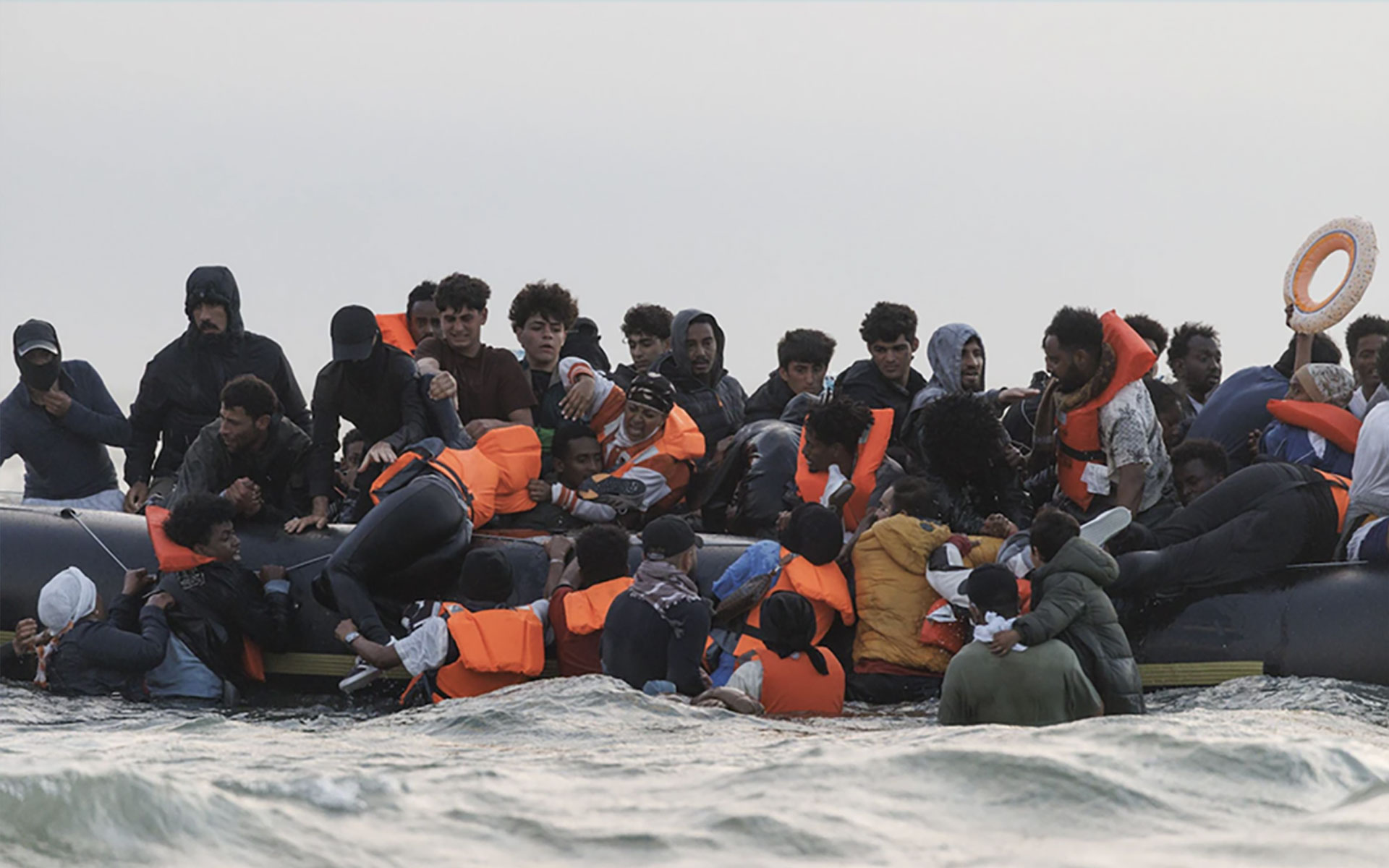
People smugglers are offering migrants ‘summer deals’ for Channel crossings as the number using the dangerous route continues to surge.
Adverts are still being shared on platforms including TikTok, Facebook and Instagram despite social media giants promising to clamp down on the content.
Posts offer crossings to the UK for prices ranging from £900 to £5,000, and often include a WhatsApp number to contact.
One advert shared on a Facebook page for Albanians promised summer journeys for ‘only £2,000’.
Others mimic business sales tactics, urging viewers to ‘migrate before it’s too late’ and tempting them with videos of successful crossings and images of British landmarks captioned ‘welcome to London’.
A total of 2,378 small boat migrants arrived in the UK this month up to Saturday. This puts it on course to be the busiest July on record, with 1,711 arriving in 2023 – the last busiest 12 days.
It comes as Sir Keir Starmer announced a ‘one in, one out’ deal that will see one illegal migrant sent back to France in return for accepting one who has made a legal claim on the Continent.
Home Secretary Yvette Cooper has refused to say how many of the thousands arriving by dinghy will be removed under the pilot scheme, amid fears it will not serve as a sufficient deterrent.
The National Crime Agency has been working with social media companies to get video footage of the crossings removed, with more than 8,000 taken down last year alone.
But the number of videos still available online show the big platforms remain a key forum for smugglers looking to reach new clients.
Dr Peter Walsh, a senior researcher at The Migration Observatory at the University of Oxford, believes content featuring migrants themselves could be particularly persuasive to anyone thinking of making the journey.
‘Research suggests individuals are more sceptical about what smugglers say, but they feel more connection with migrants who are shown making the journey themselves, particularly if they share the same nationality,’ he told MailOnline.
‘The key thing is to share information about particular routes to take, how the process works and how much it costs. The countries migrants are going to are often presented as highly desirable, but often the information is not accurate.
‘These are businesses a the end of the day, however disreputable, and prices go up and down. We’ve seen evidence of discounts being offered to people driving the boats.
‘There are anecdotal reports of specific discounts being offered to some nationalities, such as Eritreans. I’m speculating, but it might be because smugglers are working out what kind of price point they’d be able to afford.’


Several videos uncovered by the i showed the social media accounts of suspected smugglers celebrating successful crossings with gleeful captions such as ‘Welcome to London’.
One boasted ‘we are masters’ alongside celebratory emojis.
Comment threads are often used by migrants to contact smugglers.
In one comment to a TikTok clip, a user asks: ‘Guys, how does one reach Britain’, to which a suspected smuggler replies: ‘Message me.’
Ministers are under pressure to get a grip of the migrant crisis with 2025 on course to be a record year for small-boat crossings.
A Home Office spokesperson said: ‘It is unacceptable for any individual, whether they are a member of a smuggling gang or otherwise, to peddle these lies on social media and promote the criminal services of people-traffickers to others.
‘It is also unacceptable for social media companies to host this type of promotional content, which is encouraging people to put their lives at risk in the Channel.
‘As a result, we are working with the National Crime Agency and major social media companies, including TikTok, to seek the rapid removal of online content promoting dangerous small boat crossings. Since November 2021, the National Crime Agency has worked with social media companies to take down around 22,000 organised immigration crime related social media posts and accounts.’
More than 21,000 people have already made the perilous journey across the Channel, and Iraqi Kurds now dominate the people smuggling networks.
Yvette Cooper is set to strike a migrant returns deal with Iraq which would enable the UK to send more failed asylum seekers back.
The Home Secretary is said to be in the ‘final stages’ of agreeing the pact to speed up cooperation between London and Baghdad.
Ms Cooper is also planning to double down on Labour’s controversial migrants return deal by banning repeat offenders from claiming asylum.
Home Office sources said that any boat migrant who has been returned to France and then made a crossing again would not be able to apply for asylum.
Their identities would also be stored on a biometric database. A source said: ‘At about £3,000 a crossing it would be a total waste of money for them to try again.’
Human-rights campaigners have said they will support court challenges brought by small-boat arrivals, while the EU says it is assessing whether the scheme complies with the ‘spirit and the letter of the law’.
Ms Cooper is also facing calls to extend the biometric testing into an effective revival of Sir Tony Blair’s abandoned ID card plans, to stop migrants working illegally.
In May, the Home Office’s immigration white paper promised to roll out ‘digital identity for all overseas citizens’ to improve border management and ‘enforcement against illegal working and misuse’.
But there are increasing signs that ID cards could now be introduced for all citizens – not just migrants.
Last month, Downing Street was said to be looking ‘very closely’ at a so-called ‘BritCard’ that could be used to check on an individual’s right to live and work in this country.
And yesterday, Labour MPs told the Mail on Sunday that on the back of the ‘one in, one out’ deal with France, now was the time to revive a modern version of those plans.
Bury North MP James Frith said: ‘There is considerable merit in revisiting digital ID now, given how far technology and public confidence in digitisation have come since this was last considered in our politics.
‘From online banking to NHS apps, people are increasingly comfortable with secure digital services.’
He added: ‘In light of the new returns deal with France and efforts to strengthen the integrity of our asylum system, a carefully-designed digital ID could help protect access to public services, prevent abuse, and ensure faster, fairer support for those who need it.’
According to TikTok, the platform proactively removed 96.9% of content that showed human trafficking and smuggling, including 70.4% within 24 hours of posting.
Photo Credit: (Top) Dan Kitwood/Getty Images