
Understanding the Problem: How Phygital-OC Is Building a Clearer Picture of Organised Crime Today
Understanding the Problem: How Phygital-OC Is Building a Clearer Picture of Organised Crime Today
Rome, 15 March 2026
Over the past months, the Phygital-OC project has been building a shared understanding of one of the most complex and evolving security challenges facing Europe today: organised crime operating across both physical and digital environments.
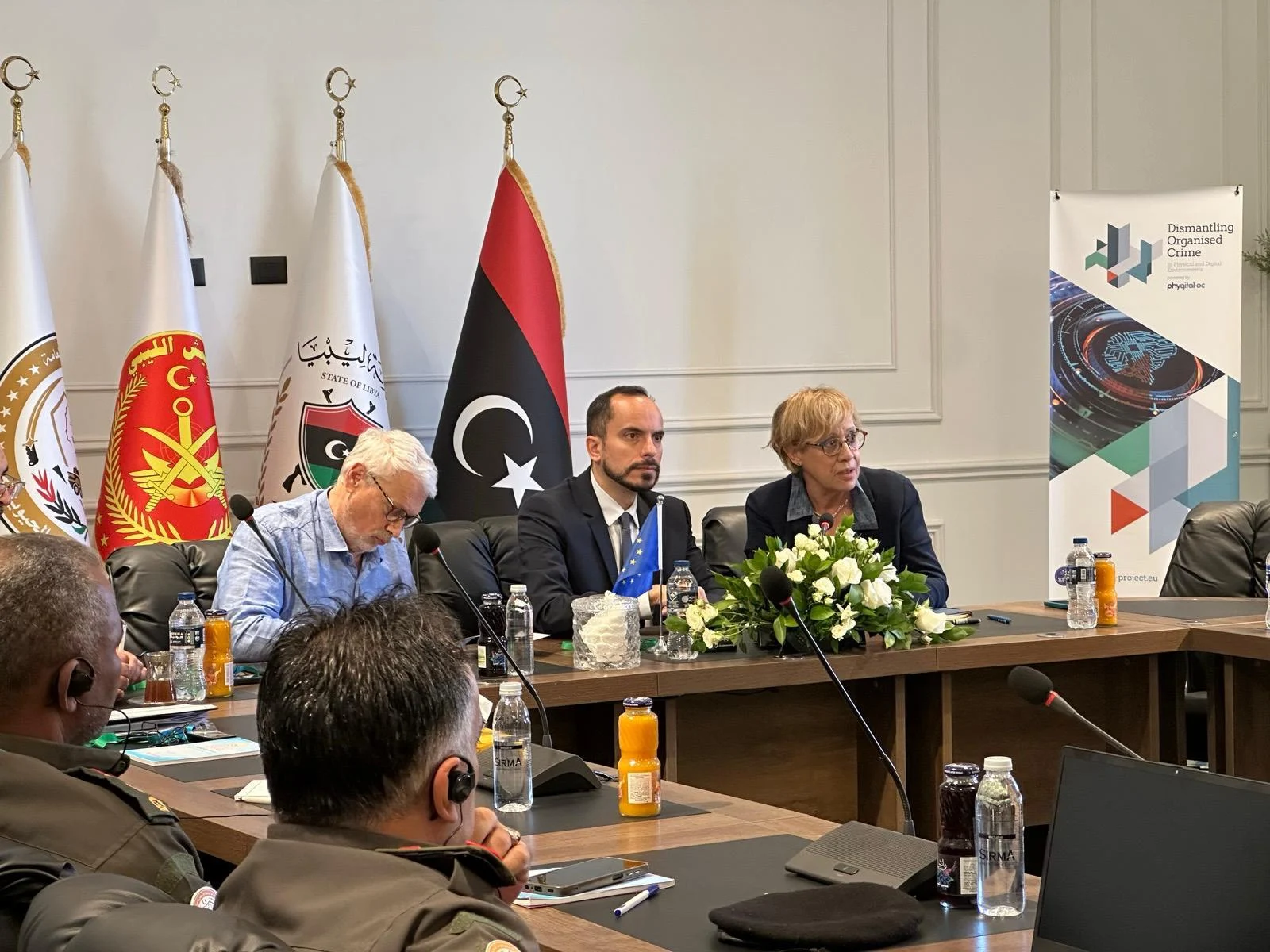
Through a combination of desktop research, expert exchange and stakeholder engagement, the project has brought together insights from law enforcement agencies, judicial authorities, researchers and practitioners from across Europe and beyond.
Community of Practice events, Exchange Events, podcasts and the first Phygital-OC project magazine – PHYGITAL – have all contributed to this growing body of knowledge, capturing perspectives from different regions and sectors on how organised crime is evolving.
What is emerging is a clear picture of a changing threat.
Organised crime groups (OCGs) – particularly ethnic mafia-style networks – remain highly resilient and difficult to disrupt. Built on strong family, community or ethnic ties, these groups benefit from high levels of trust, internal cohesion and secrecy, often embedding themselves within local communities and, in some cases, influencing local governance structures.
At the same time, these groups are increasingly poly-criminal, engaging in a wide range of illicit activities – from drug trafficking and human trafficking to migrant smuggling, money laundering and cybercrime. Operating across borders, they form complex transnational networks linking key regions and trafficking routes, while exploiting digital tools to expand their reach and evade detection.
Today’s organised crime groups are “phygital” actors – operating simultaneously in physical and digital spaces. From encrypted communications and social media to online marketplaces and emerging technologies, digital tools are now central to how criminal networks coordinate, recruit, finance and operate.
This convergence of physical and digital crime presents new challenges for law enforcement and requires a more coordinated and collaborative response.
“This first phase of the project has been critical in building a shared understanding of how organised crime is evolving across physical and digital environments,” said Sergio Bianchi, Project Coordinator at Agenfor International. “By bringing together insights from across Europe and beyond, we are now able to translate that knowledge into action. As we move into the next phase of delivery, this understanding will directly inform the tools, training and operational capabilities we are putting in place to support more effective investigations.”
By developing this shared understanding, Phygital-OC is laying the groundwork for its next phase – focused on delivery. This will include deploying advanced technologies, training specialised teams and establishing new operational structures to support coordinated, cross-border investigations.
As the project progresses, this collective insight will play a key role in shaping a more effective and joined-up response – helping to prevent, detect and dismantle organised crime in an increasingly phygital world.