
Phygital-OC Advances Cooperation with Libya Through High-Level Engagement and First Training Delivery
Phygital-OC Advances Cooperation with Libya Through High-Level Engagement and First Training Delivery
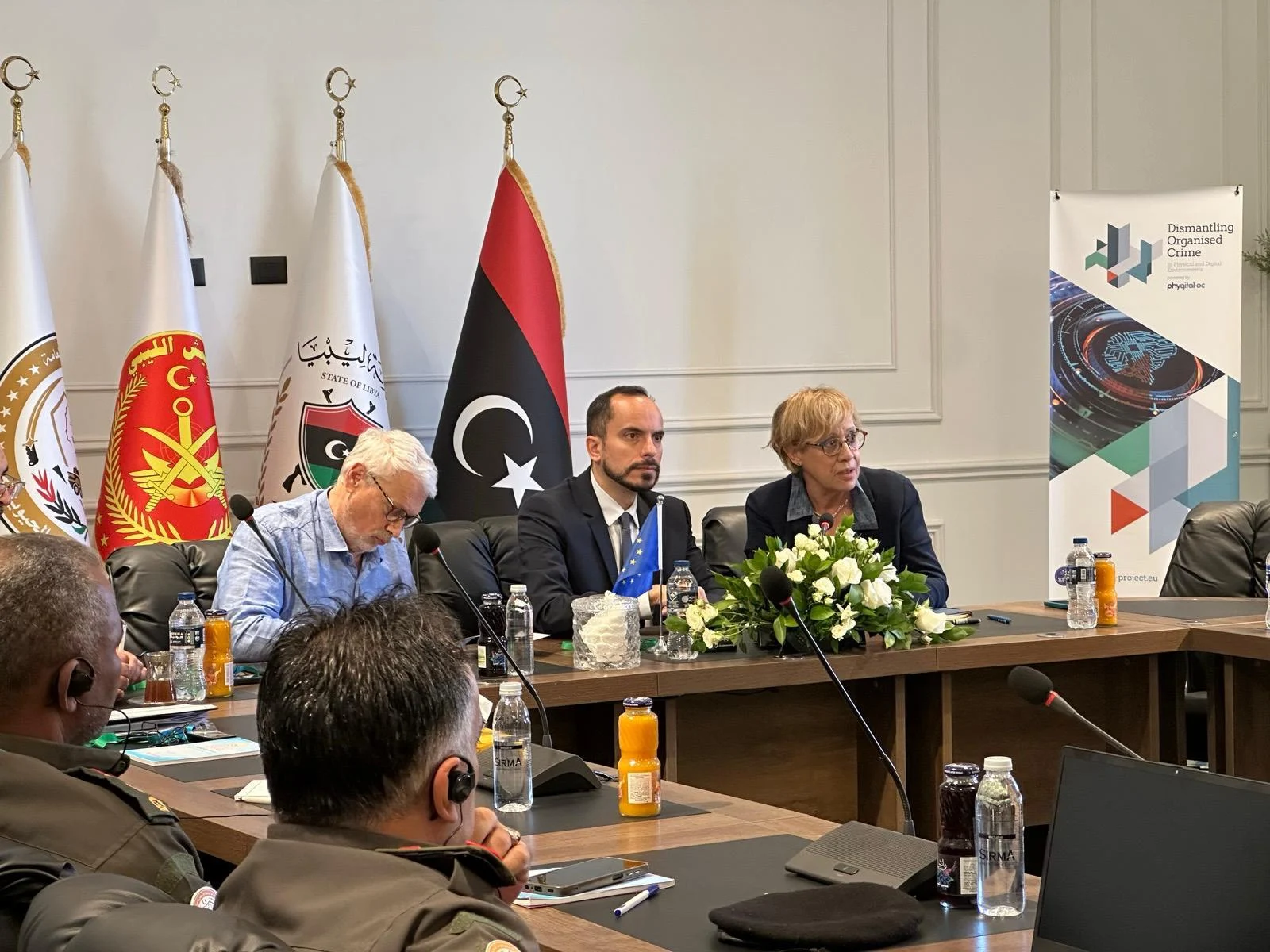
Tripoli, 9 April 2026
The Phygital-OC project has taken an important step forward in strengthening international cooperation with Libya, combining high-level institutional engagement with the delivery of its first training activities on the ground.
Building on connections established during the project’s second Community of Practice event held in Rome earlier this year, representatives from Agenfor International, the project coordinator, travelled to Tripoli to meet with senior officials from the Libyan Government. The meetings provided an opportunity to explore practical avenues for collaboration between European and Libyan law enforcement agencies (LEAs), particularly in addressing organised crime groups (OCGs) operating along the Central Mediterranean route.
Discussions focused on how cooperation can be strengthened in concrete terms, including improved information exchange, joint analysis and the use of advanced digital tools to better identify, monitor and track criminal networks operating across physical and digital – ‘phygital’ – environments. The visit marked a significant step in translating dialogue into operational collaboration.
Alongside these meetings, the mission also marked the delivery of one of the first Phygital-OC training activities, held in Tripoli from 7th to 9th April 2026. The training brought together representatives from key Libyan authorities, including the Ministry of Interior, Ministry of Defence, Border Guard agencies, the Libyan National Center for Counterterrorism and the Customs Administration.
Designed as part of the project’s wider training programme, the course focused on building practical investigative capabilities in areas such as open-source intelligence (OSINT), human intelligence (HUMINT), digital monitoring and forensic analysis. Participants were introduced to core concepts in cybersecurity, threat intelligence and digital investigations, alongside hands-on exercises based on realistic operational scenarios.
The training aimed to equip investigators from different operational backgrounds with the skills needed to navigate the digital dimension of organised crime, even without advanced technical expertise. By strengthening their ability to collect, analyse and interpret digital information, the programme supports more effective investigations and better integration between technical and operational teams.
“This mission represents an important milestone for the project,” said Natalina Cea, Agenfor and Phygital-OC Project Coordinator. “By combining strategic dialogue with concrete training delivery, we are building the foundations for stronger cooperation and equipping partners with the tools needed to address organised crime in both its physical and digital dimensions.”
The activity reflects the Phygital-OC project’s broader objective to bridge the gap between physical and digital investigations and to strengthen collaboration between European and international partners. It also marks the transition of the project into its delivery phase, with training activities now being rolled out to support LEAs in tackling increasingly complex and technology-enabled crime.
Looking ahead, Phygital-OC will continue to expand its training programme and deepen engagement with partners across the Mediterranean, reinforcing a shared and coordinated response to organised crime.