
Balkan Crime Groups Tightening Grip on South American Drug Trade
Balkan Crime Groups Tightening Grip on South American Drug Trade
Organised crime groups from the Western Balkans are emerging as key players in smuggling cocaine from Latin America, according to a new report.
“Cocaine connections: Links Between the Western Balkans and South America”, a new report launched on Tuesday, highlights the crucial role that organised crime groups coming from Western Balkan countries now play in the trade of trafficked cocaine.
The study, conducted by the Global Initiative Against Transnational Crime and based on extensive research and over 100 interviews conducted between October 2022 and November 2023, highlights the evolution of these criminal organisations and their growing influence.
The research outlines how Western Balkan criminals initially established links in South America in the late-1990s, expanded in the early 2010s, and consolidated their operations by the mid-2010s. Groups such as “Group America”, founded by migrants from the former Yugoslavia, were among the pioneers in drug trafficking.
“By the mid-2000s, local criminal organisations, such as the Darko Saric group, had also started forming direct connections with cocaine suppliers in South America,” the report’s author, Fatjona Mejdini, said in an online presentation.
“The real transformation occurred in the 2010s, when groups like the Montenegrin ‘Kavaci’ and ‘Skaljari’ clans, the Bosnia-based ‘Tito and Dino’ cartel, and Albanian-speaking networks, such as ‘Company Abelo’, gained significant control over the cocaine supply chain,” she added.
The report attributes this expansion to both “push” and “pull” factors. The “pull” factors include the significant rise in cocaine production in South America, which nearly doubled between 2013 and 2017, reaching some 2,000 tonnes by 2020.
Meanwhile, the fragmentation of Colombian drug cartels created new opportunities for foreign actors, enabling Western Balkan criminals to establish direct relationships with local suppliers and bypass intermediaries. The growing demand for cocaine in Europe has also played a crucial role in strengthening their operations.
The “push” factors that have facilitated their expansion stem from the Balkans’ historical role as a transit hub for illegal trade, including arms smuggling and heroin trafficking.
The wars of the 1990s further contributed to the region’s criminal expertise, as former paramilitary members joined organised crime networks. Weak judicial systems and high levels of corruption allowed these groups to operate with impunity, enabling them to expand their operations beyond their home countries into major European drug markets.
Unlike traditional drug cartels, Western Balkan groups have adopted a decentralised operational model in South America, the report explains.
Rather than basing their key leaders in the region, they rely on skilled brokers who work for them on a part-time or full-time basis.
These include fugitives from European law enforcement, designated emissaries representing specific organisations, and business owners involved in legal trade who use their enterprises as fronts for illegal activities.
A key advantage of the groups is their ability to pay cocaine suppliers in cash upfront, making them preferred partners for local producers compared to Mexican cartels, which often rely on barter systems involving weapons or other drugs.
Additionally, these criminals have embedded themselves within South American societies, investing in businesses, laundering money, and maintaining low profiles to avoid detection by authorities.
Western Balkan groups have also leveraged corruption, exploiting weak border monitoring and law enforcement structures. They frequently use forged documents and multiple identities to evade detection, further complicating efforts by authorities to dismantle their networks.
The report says Ecuador has emerged as a focal point for their operations, serving as a case study in how these groups integrate into local criminal landscapes.
As their influence continues to grow, authorities in both Europe and South America face mounting challenges in curbing the activities of these powerful and highly adaptable organisations, the report warns.
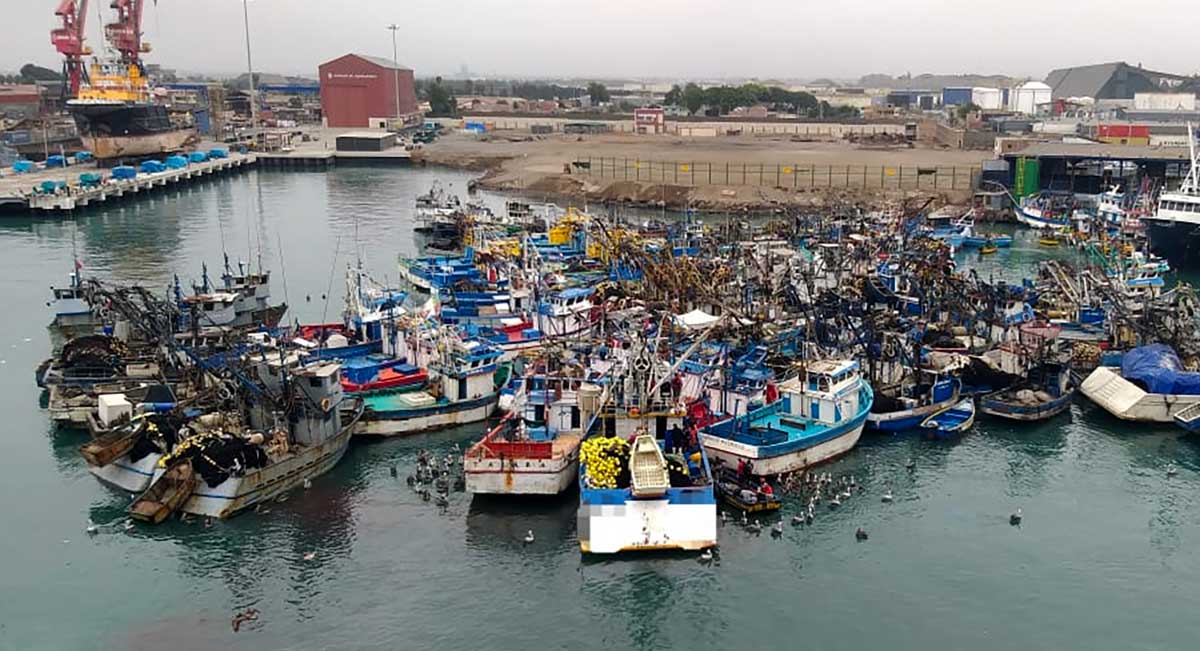
Image: A fishing boat used to transport drugs to cargo ships at the Peruvian port of Calao.
Credit: BIRN