
17 suspected human traffickers arrested in Albania and Colombia
17 suspected human traffickers arrested in Albania and Colombia
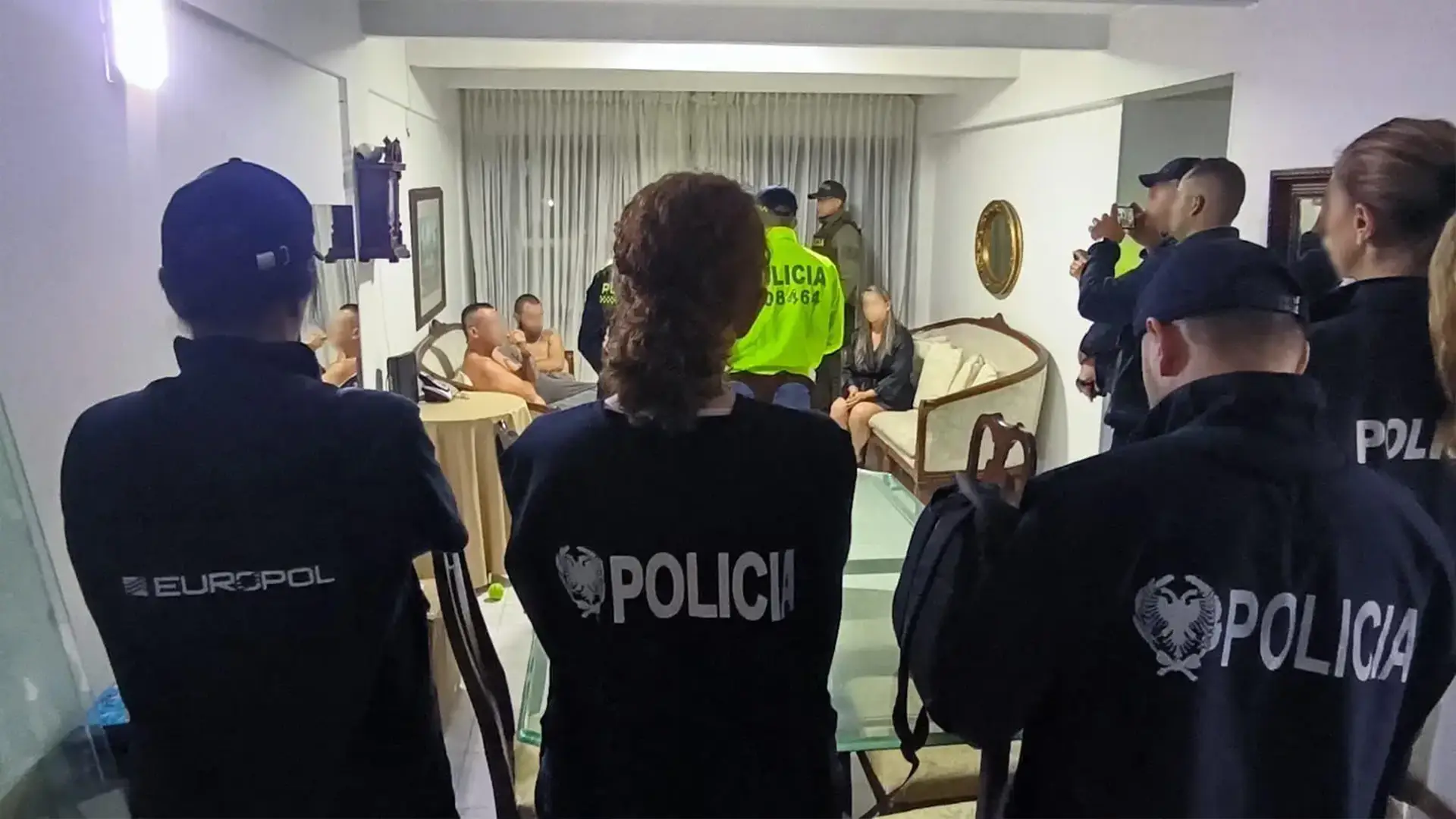
The criminal network is believed to have sexually exploited over 50 victims in Albania and Croatia, trafficked from South America to Europe
A major investigation carried out under a Europol taskforce has led to the dismantling of an internationally active human trafficking network. The operation involved the Albanian State Police (Policia e Shtetit), the Colombian National Police (Policía Nacional de Colombia) and Croatian Police (Hrvatska Policija) and was supported by Eurojust. The investigation resulted in a simultaneous action day in Albania and Colombia on 1 October 2025.
The actions led to:
- 16 house searches (7 in Albania and 9 in Colombia);
- 17 arrests (7 in Albania and 10 in Colombia);
- 54 victims originating from South America were identified (44 in Albania, 5 in Croatia and 5 in Colombia);
- Seizures include evidence and equipment; further seizures are ongoing.
International cooperation exposes mobile human trafficking network
A criminal network, composed mainly of Colombian nationals, recruited and transported vulnerable women from Colombia to Europe. Once under the network’s control, the victims were subjected to sexual exploitation in several European countries, including Albania and Croatia. The suspects operated with a high level of mobility, which complicated national investigations. International cooperation between Albania, Croatia and Colombia, facilitated through Europol, was essential in linking the main organisers with local associates who acted on their behalf in transit countries and countries of exploitation. The main suspect, identified as a High-Value Target within a Europol taskforce, coordinated the group’s activities while also distancing himself from the direct exploitation.
Call centre to manage the exploitation activities
The investigation revealed a highly organised structure within the network, with members assigned to specific roles ranging from recruitment and transport to the direct control and exploitation of victims. Sexual services were advertised on adult websites, with negotiations on pricing and services handled by call centre operators, leaving victims with no control over their own lives. The so-called “agencies” oversaw every detail, from recruitment to money collection, often subjecting victims to psychological and physical violence, as well as threats against family members in Colombia. At least half of the illicit proceeds were channelled to the main organiser, who relied on sophisticated money laundering methods to whitewash the criminal profits.
Europol supported the operational activities, facilitated the exchange of information and provided analytical support. On the action day, Europol deployed an expert to Colombia to cross-check operational information in real time, support investigators on the ground and coordinate cross-border cooperation.
This investigation was supported by Italy’s Ministry of Interior through the EU4FAST multi-donor project addressing migrant smuggling and human trafficking in the Western Balkans.

The European Multidisciplinary Platform Against Criminal Threats (EMPACT) tackles the most important threats posed by organised and serious international crime affecting the EU. EMPACT strengthens intelligence, strategic and operational cooperation between national authorities, EU institutions and bodies, and international partners. EMPACT runs in four-year cycles focusing on common EU crime priorities.